
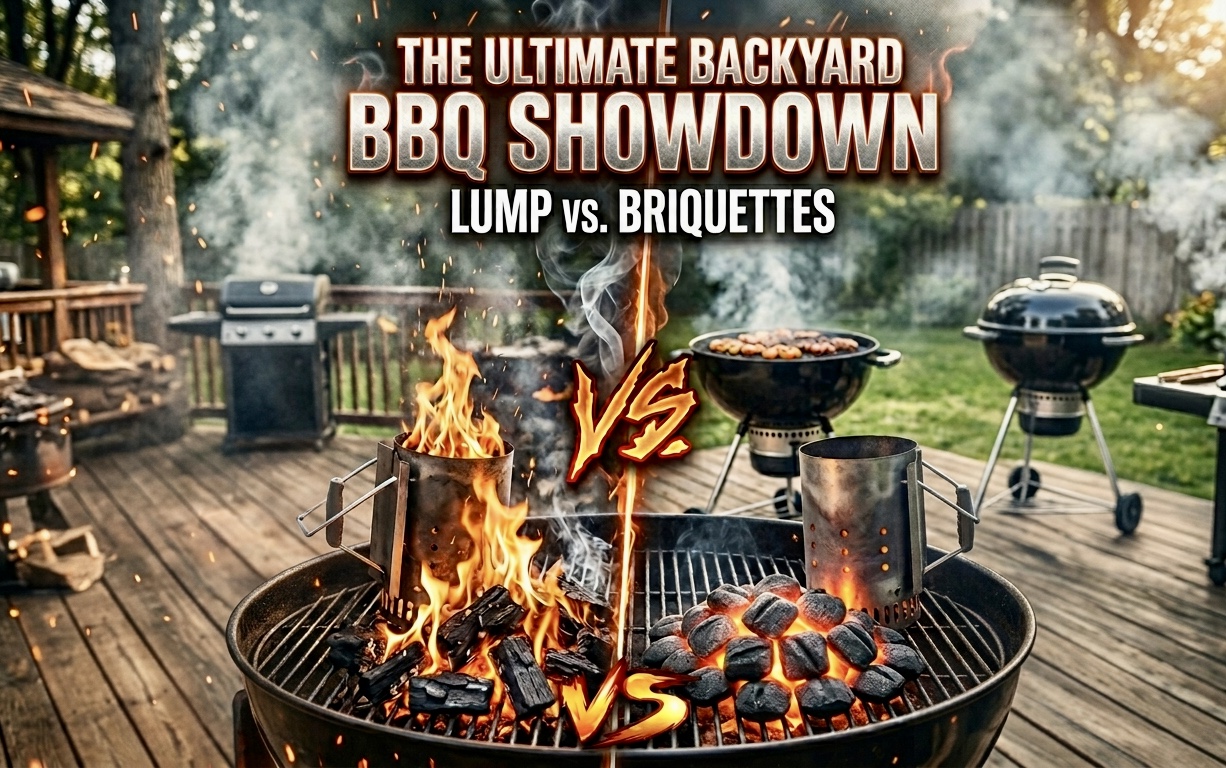
Lump Charcoal vs. Briquettes
You’re sitting there trying to decide what’s hitting the grill today. Ribeyes? Brisket? Burgers? Chicken?
You jump in the car, crank up the music, and suddenly your BBQ cravings go into overdrive. By the time you pull into the store parking lot, your mind is racing with smoky possibilities. You make a beeline for the meat department and pick out that perfect cut.
But then it hits you…
“What fuel am I using today?”
You stroll down the charcoal aisle and stare at the mountain of options. Bags everywhere. Brands everywhere. Lump charcoal. Briquettes. Hardwood blends. Competition fuel.
So what’s the difference? And does it really matter?
Short answer: absolutely.
Choosing the right fuel can completely change your cooking experience, flavor profile, heat control, and final results. Both lump charcoal and briquettes have their strengths and weaknesses, and understanding them can make you a better pitmaster.
So let’s fire it up and break it down.
Lump Charcoal
What Is Lump Charcoal?
Lump charcoal is made from 100% natural hardwood that has been burned down in a low-oxygen environment until all moisture and impurities are removed. What’s left is pure carbonized wood with no fillers or chemical binders.
In simple terms: it’s real wood turned into grilling fuel.
Why BBQ Fans Love Lump Charcoal
100% Natural
No chemicals. No fillers. No mystery ingredients. Just pure hardwood.
Hot and Fast
Lump charcoal burns hotter than briquettes, making it perfect for getting that steakhouse-quality sear on steaks and burgers.
Lights Quickly
You can usually be ready to cook within 10–15 minutes.
Excellent Temperature Control
Lump reacts quickly when adjusting your grill vents, giving you responsive heat control.
Less Ash
Since it burns cleaner, you’ll spend less time cleaning out ash and more time cooking.
Incredible Flavor
Because it’s real wood, lump charcoal delivers a clean, authentic wood-fired flavor that BBQ lovers crave.
The Downsides of Lump Charcoal
Inconsistent Sizes
One bag might contain huge chunks, tiny chips, and everything in between. This can make heat distribution uneven.
Burns Faster
Lump charcoal burns hotter, but it also burns quicker, meaning you may need to add more fuel during long cooks.
More Expensive
Quality lump charcoal usually costs more than briquettes.
Temperature Swings
Because pieces vary in size and wood type, maintaining steady low temperatures for long smoking sessions can be tricky.
Popping and Sparking
Some lump charcoal can spark or pop during ignition, especially in open grills.
Occasional Debris
Cheaper brands sometimes contain unwanted materials like rocks or scraps of construction wood.
Best Uses for Lump Charcoal
Lump charcoal shines when you need:
- High heat
- Fast cooking
- Great searing
- Authentic wood flavor
Perfect for:
- Steaks
- Burgers
- Chicken
- Quick grilling sessions
Briquettes
What Are Briquettes?
Briquettes are compressed blocks made from charcoal dust, sawdust, wood byproducts, and binding agents. Their uniform shape allows for a very controlled and predictable burn.
Think of briquettes as the reliable workhorse of the BBQ world.
Why Pitmasters Still Love Briquettes
Consistent Burn Times
Because every briquette is nearly identical, they burn evenly and predictably.
Excellent for Low and Slow BBQ
Briquettes are ideal for smoking brisket, pork shoulder, ribs, and other long cooks.
Reliable Heat Control
You won’t have to constantly adjust your fire during extended sessions.
Budget Friendly
Briquettes are widely available and usually more affordable.
Fewer Sparks
Their dense construction means less popping and sparking compared to lump charcoal.
Sustainable Options Exist
Many modern briquettes are made from recycled wood materials without harsh chemicals.
The Downsides of Briquettes
More Ash Production
Briquettes create a lot more ash, which can affect airflow during long cooks if not cleaned out.
Chemical Additives
Traditional briquettes may contain binders and accelerants that can create a chemical smell while lighting.
Slower to Heat Up
They take longer to ignite and reach cooking temperatures.
Lower Maximum Heat
Briquettes generally can’t reach the intense searing temperatures lump charcoal can.
Less Natural Smoke Flavor
Because they’re processed, the flavor profile isn’t quite as authentic as natural hardwood lump.
How to Improve Briquette Flavor
Here’s the good news: you can still get incredible smoke flavor with briquettes.
Simply add wood chunks directly to your fire:
- Hickory for bold smoke
- Applewood for sweetness
- Mesquite for intense Texas-style flavor
- Cherry for a mild, slightly sweet finish
You can also switch to all-natural briquettes that use plant-based binders and avoid chemical additives.
So… Which One Should You Use?
Honestly, there’s no wrong answer.
If you want blazing heat, fast grilling, and killer steak sears, lump charcoal is tough to beat.
If you’re cooking overnight briskets or want steady temperatures with minimal babysitting, briquettes are hard to argue against.
At the end of the day, it comes down to your cooking style, your grill, and the kind of BBQ experience you enjoy most.
And let’s be real… this debate has been raging in backyards and BBQ competitions for years, and it probably always will.
That’s part of the fun.
To help you decide, check out the comparison charts below for a quick side-by-side breakdown.
Until then…
Happy Grilln’, Chilln’, and Refilln’!
